
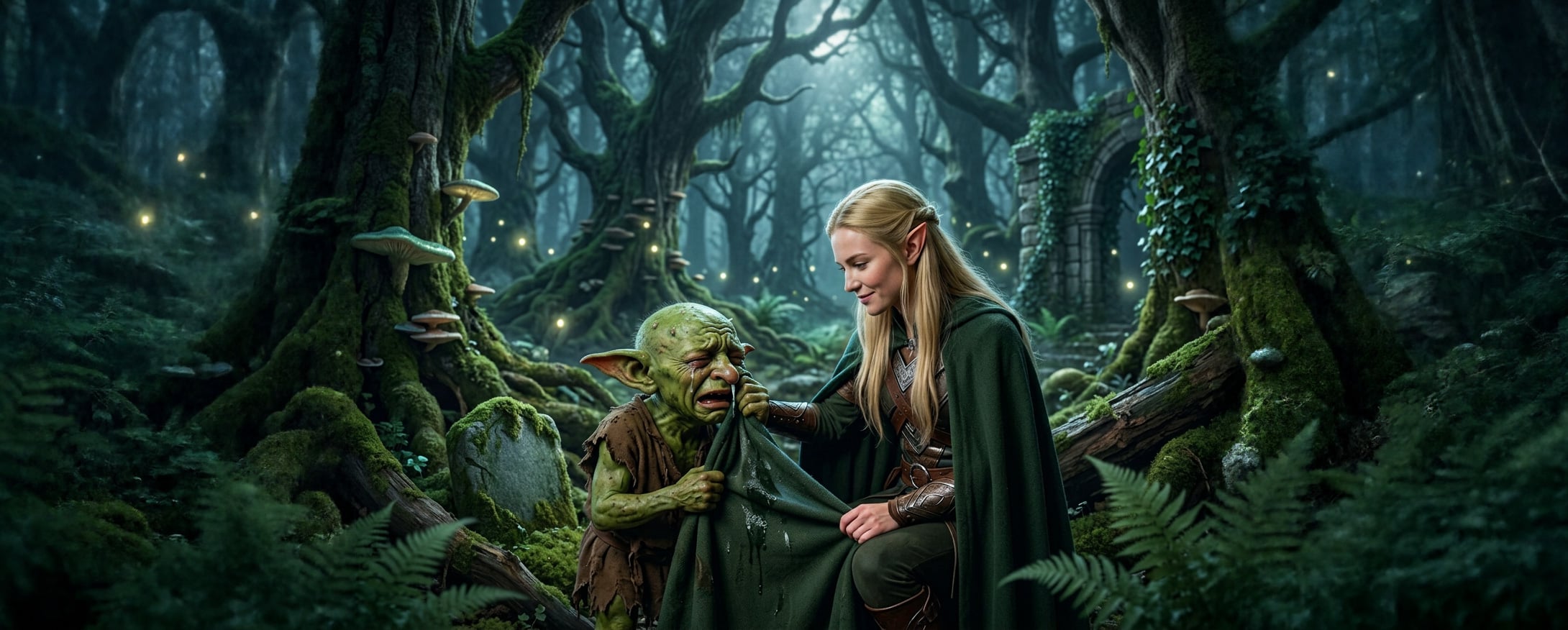
Working together, playing together, experiencing things together: Colleagues from different countries came together for a game of Dungeons & Dragons. Some had never played before and didn’t know anyone else in the group. Between their first attempts and surprising twists, they discovered how their ideas came together to form a shared story.
What happens when coworkers create a fantasy adventure together? In Dungeons & Dragons (D&D for short), each person takes on a character and decides what that character does. A game master describes the world and responds to the group’s ideas. The game is played through conversation; dice help determine whether a daring action succeeds. An online session at All for One showed just how surprising this can be.
A goblin—a small, green, ugly creature with a human-like form—stands right in front of the player’s character. Her available spells are used up, so now a punch is supposed to do the trick. But the punch comes out so weak that it turns into a gentle touch. The goblin bursts into tears. Finally, someone is being kind to him. He clings to his opponent’s robe, declares the character his best friend, and then uses the fabric as a handkerchief.
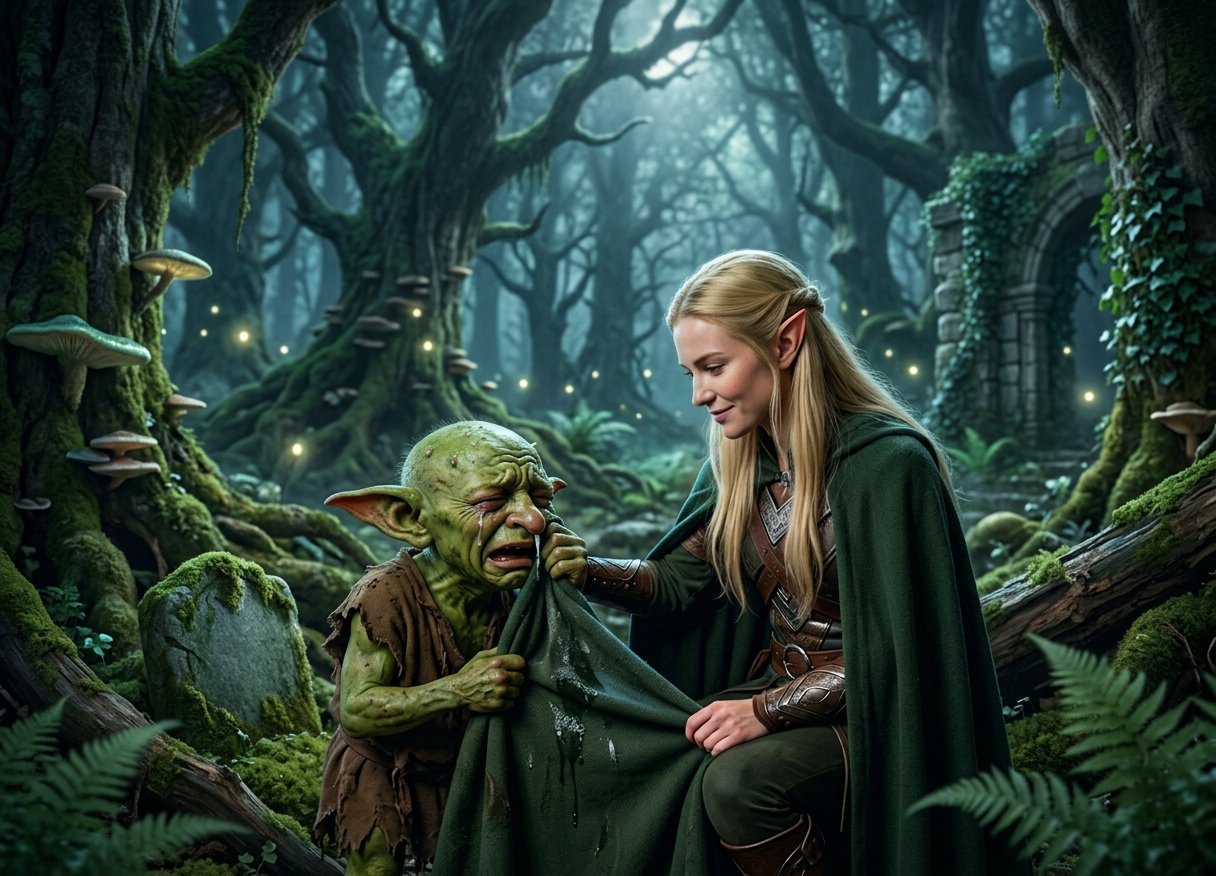
This is how Game Master Chris Pyak describes a scene from the D&D session at All for One. The group went along with the twist and got the goblin to reveal important information about their destination. An attack had turned into an opportunity for conversation.
Surprises like this are part of role-playing. The players make decisions, and the game master has the fictional world react to them. Together, the story can take a direction that no one expected.
Organized—and almost didn’t play myself
The invitation to the online adventure appeared in our Engage community “All for One Gaming.” A roughly two-hour session with professional game master Chris was scheduled for September 14. No prior experience was required.
Kali (name changed at the player’s request) had organized the evening, initially with the support of someone from the company who was experienced in role-playing. She herself was completely new to pen-and-paper role-playing games. Actually, she hadn’t planned to participate: she had other plans and was a bit unsure of what to expect. In the end, she stayed to help a colleague with technical difficulties—and out of curiosity.
Daniela had already played D&D a few times. She wanted to join in again and learn more. She was also curious to see what it would be like to play with coworkers. She didn’t know anyone in the group personally beforehand.
Another player had heard of D&D and watched a few videos beforehand, but had never played it herself. Since she rarely played games in general, she was nervous at first. In addition to the unfamiliar rules, she wondered how comfortable she would feel with people she had never met before.
How a Conversation Turns into an Adventure
Dungeons & Dragons, or D&D for short, is a pen-and-paper role-playing game. Paper, pens, and dice are the classic tools of the trade. Online, digital applications can take over some of these functions. The focus is on conversation.
Each player takes on the role of a fictional character with unique abilities. The game master—also known as the “Dungeon Master” in D&D—describes the setting and embodies the other characters in the game world. The players decide what their characters will attempt. Rules and dice help determine the outcome of uncertain actions.
The group can explore a location, ask someone for help, or try out an unusual plan. This gives rise to new situations, to which everyone can then react. Anyone who wants to can speak directly as their own character. It’s also easy to simply describe what their character should do. No acting experience is required.
For “All for One,” a so-called “one-shot” was announced: an adventure designed for a single gaming session. Interested players could try out the hobby without immediately committing to a longer campaign.
Chris says he prefers to start right away with a scene and explain the possibilities as he goes. His previous work as a career coach for international professionals helps him with this: he conveys new information by relating it to what each person is currently trying to achieve.
Daniela found it nice to be able to ask about rules or her character’s options at any time. Kali describes Chris as patient and encouraging. He made it easier for them to get started while also showing them just how much there is still to discover in the game.
Familiar Faces at the Gaming Table
The stereotype of the scruffy nerd hardly does justice to the diversity of role-players. Even well-known actors and actresses publicly express their enthusiasm. Vin Diesel has played D&D. Deborah Ann Woll, known from “Daredevil” and “True Blood,” also plays and even runs her own adventures.
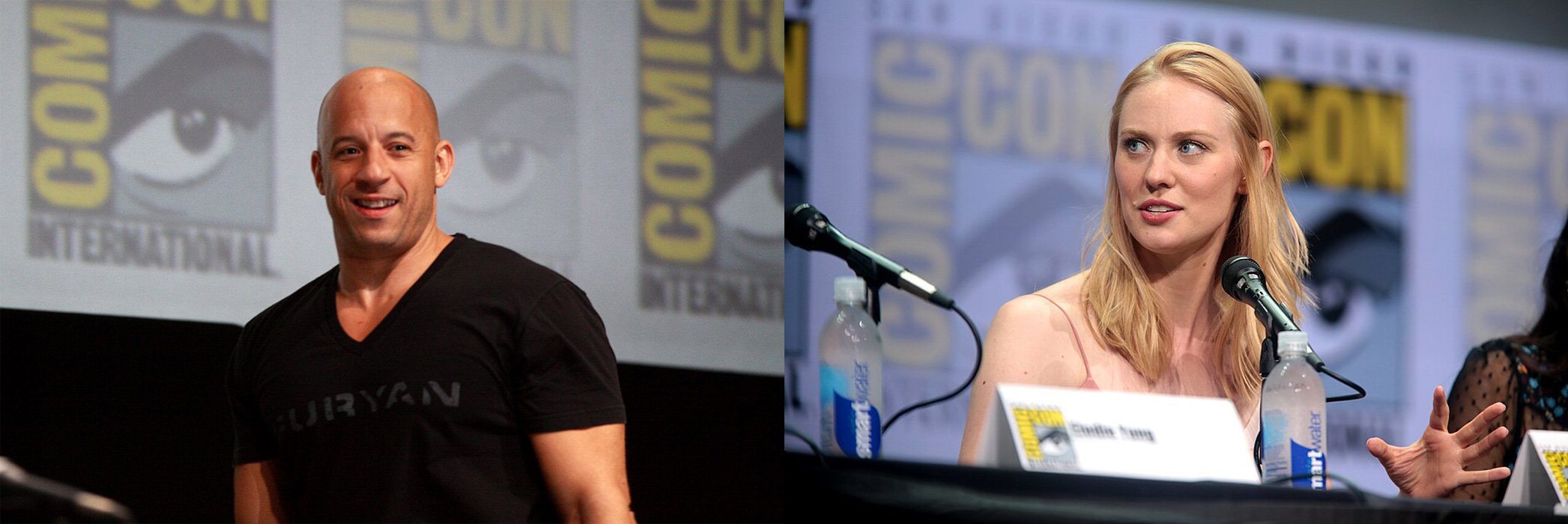
Two familiar faces in the role-playing scene: Vin Diesel & Deborah Ann Woll
“Vin Diesel 2013 SDCC”by Gage Skidmore, licensed under CC BY-SA 2.0.
“Deborah Ann Woll (35380671423)” by Gage Skidmore, licensed under CC BY-SA 2.0.
Perhaps some of my colleagues have already encountered this hobby through other media. In “Stranger Things,” D&D is part of the main characters’ shared lives. “Baldur’s Gate 3” brings its world and game mechanics to the video game. The animated series “The Legend of Vox Machina” on Amazon Prime Video is based on an actual campaign from the role-playing show Critical Role.
It was through Critical Role that Chris also discovered the hobby during the pandemic. The professional voice actors fascinated him, but at the same time intimidated him. As he recalls, it took him a year to start playing himself, and another year before he began running sessions. Today, he works as a professional game master and writer.
Your own group can find its own style. You don’t need stage-worthy dialogue for a successful evening. A single question or a spontaneous idea can be enough for the others to pick up on something and run with it.
The Same Path, Two Different Ideas
For Kali, an early scene became a “lightbulb moment.” Chris showed the group a path with a forest on both sides. At the end of it stood horses. What did the characters want to do?
Kali’s first thought was to go to the animals and take them along. The horses could carry people or equipment; in return, the group would take care of them.
As Kali recalled, Daniela had a different take on the situation. She didn’t want to trust the seemingly harmless path right away and suggested exploring the surroundings first. Shortly afterward, six goblins appeared in the forest.
At that moment, Kali realized she could question the situation. What had seemed obvious at first allowed for other interpretations. A fellow player had considered something that hadn’t even occurred to her.
This is where the shared creative space becomes tangible: Everyone receives the same description and contributes their own ideas. Asking a question may yield additional information. An objection draws attention to a risk. From this exchange emerges what the group wants to try next.
Another player described this sense of participation as particularly wonderful. As the evening progressed, she increasingly understood how her decisions helped shape the story. Chris guided the group through the adventure while also leaving room for them to choose their own paths.

Dungeons & Dragons Game Master Chris Pyak
For him, this freedom is an integral part of game mastering. He doesn’t want to dictate the group’s approach but rather let the game world react to their decisions in a way that makes sense. He’s played the same adventure more than 170 times with new players. Yet it unfolds differently every time.
Finding Solutions Together
Within the story, conflicts can be resolved in different ways. The encounter with the crying goblin began with an attack. It was only Chris’s reaction that opened up the possibility of striking up a conversation. The group took the opportunity and obtained information.
To do this, they had to adapt to the changed situation. An action had produced a different result than expected; now they had to continue playing with that outcome. An adventure constantly provides opportunities to test an assumption or change an original plan.
This is distinct from the communication among the players at the gaming table. Which idea should be tried first? How does the group handle it when someone has reservations? Chris says that the players are generally well-equipped to make such decisions on their own.
Kali recalls a lively discussion where everyone shared their views. Most of the time, they agreed on how to proceed. That’s precisely why the differing assessments of the forest path stuck in her memory.
She sees a possible connection to collaboration in the workplace. Making joint decisions requires expressing one’s own opinion and listening to others’ suggestions. In the game, it might be easier to become more comfortable with such discussions because they’re less formal than in everyday work life. You can even try out disagreeing there: suggest a different path, explain your reasons, and work together to figure out how to proceed.
You Can Start Small When Trying New Things
For Kali, the process of trying things out began with the decision to play the game in the first place. Normally, she likes to know what she’s getting into and thinks through her answers beforehand. At first, it wasn’t easy for her to react spontaneously and let her guard down a bit.
During the game, she observed how the participants gradually felt more at ease and used their characters to express themselves. She experienced this in herself as well. Chris encouraged her to feel free to be a little more exuberant. Afterward, she was proud of having opened herself up to the unfamiliar situation.
A character provides space for such experiments. Someone can speak up, pursue an unusual idea, or let others take the initiative. What feels unfamiliar in this process varies from person to person.
The other player also felt more confident as her understanding of the game grew. Step by step, she learned what her character was capable of. Playing together also made it easier for her to connect with the others.
No one has to entertain the whole group. Chris emphasizes: “And if someone is more quiet, that’s perfectly fine.” He describes how he offers reserved players time-limited situations that suit their strengths and don’t overwhelm them. For corporate game sessions, he also sets a clear requirement: Participation should always be voluntary.
What Remains from the Evening Together
The adventure didn’t start entirely smoothly. Daniela and Kali report technical difficulties. According to Kali, setting up working logins and the connection to the session took quite a bit of time. She’d like to improve that for the next session. Once everything was up and running, she wouldn’t have changed a thing.
This aligns with Chris’s general advice for such events: It should be clarified in advance whether the necessary applications and websites are accessible on the company network.
Daniela particularly remembers the first battle. In her estimation, most of the players had little experience, and many had chosen a spellcaster character. In direct combat, she found the group’s setup to be rather disadvantageous.
“Our first major challenge was actually just to survive that battle,” she says. That’s precisely what made the situation funny and memorable for her.
During the game, the conversations among the participants—who were joining from different countries—became increasingly relaxed. Daniela describes the encounter this way: “You get to know each other in a completely different way than in a normal professional conversation.”
Working together, playing together, experiencing things together: That evening, this meant getting to know colleagues they’d never met before and embarking on an adventure together. All three players interviewed would participate again. Daniela says, “I had a lot of fun and would definitely take part in a session like this again.”
DISCOVER the right role for you
Want to dive into the IT & consulting world at All for One? Click here for job openings
by Lewin Roger
Oct 7, 2026, 11:48:49 AM


.jpg)